Doors & hardware · 3 min read
Door handle hitting the wall? Choose the stopping point before the hardware
A door stop needs to catch the door before its handle reaches the wall, while leaving enough opening for everyday use. Start with that stopping position, then choose the hardware. A stop that looks like the old one may have a different reach or need a different mounting surface.
Keep the useful opening in the decision
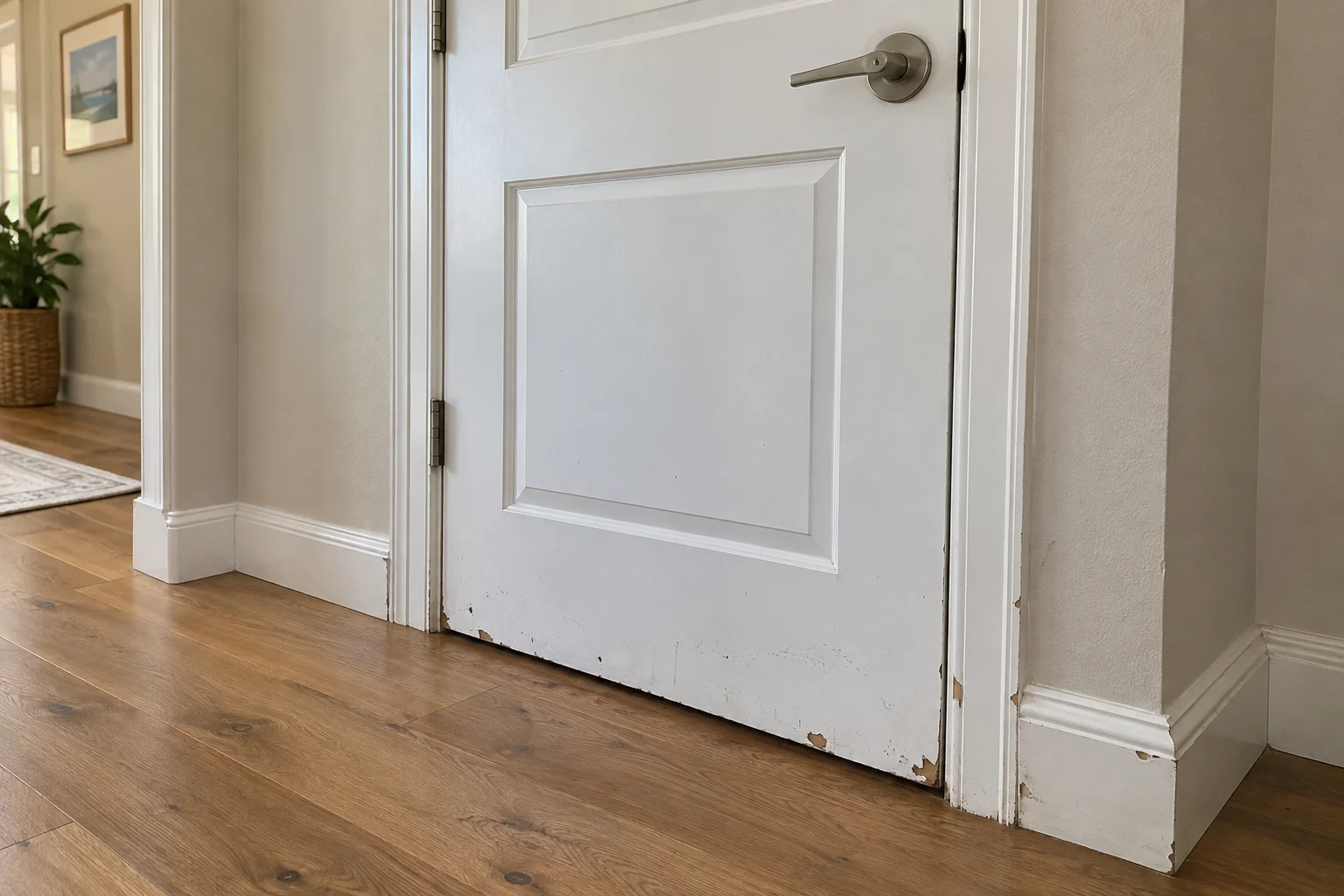
Identify what currently makes contact: the handle, door edge or another fitting. Note the opening needed to walk through, reach a closet or move furniture. Include a radiator, towel rail or cabinet behind the door in that discussion. Do not repeatedly swing the door into the damage to demonstrate it.
Ask the installer to review the proposed stopping position with the room as you use it. If a different handle or new furniture is planned, include it now. Preventing one collision should not leave a door that opens too little to use comfortably.
Compare where the stop can attach
Wall or baseboard: these options make sense to assess when a suitable surface lies behind the opening door. Ives offers both spring and solid-metal base stops with cushioned tips. Compare the proposed reach and contact point, not just the finish. A wall bumper and a projecting baseboard stop meet the door differently.
Floor: consider this when wall space is obstructed or a wall stop is impractical. Ives cautions that floor stops need placement that avoids a trip hazard. Have the bumper height checked against the door's bottom clearance, and include rugs and the normal walking route when reviewing its position.
A hinge-pin stop needs a hardware match
National Hardware's N830-580 is retained by the hinge pin and has an adjustable stopping position and a pad designed for full door contact. That offers another arrangement to evaluate when you prefer not to add a stop to the floor or wall. It does not establish compatibility with every hinge.
Have the hinge type, pin fit and intended pad contact checked for the selected model; leave the hinge assembled for the initial inquiry. Ives describes hinge-pin stops generally as suitable for lightweight doors rather than heavy-duty use. Mention a heavy door, frequent impacts or an existing closer before choosing this approach.
Include the attachment and existing damage
Ives identifies wood-application fasteners for its residential base stops. Included screws do not establish suitability for every wall, trim or floor. Ask for the actual surface, support and concealed obstacles to be assessed before any mounting location is approved.
Show a loose old stop, split trim or damaged wall separately. Agree whether the work includes repairing the attachment, filling the previous holes and restoring paint, as well as fitting the new stop. Covering a mark and providing secure support are separate jobs.
Confirm the result at handover
Send Coast & Craft your preferred opening, door and nearby-surface photos, and any product link. Ask for normal opening, closing and latching to be checked after the work, along with clearance from the original obstruction. Scope and the requested visit time need confirmation before the appointment.
Sources & product details
Manufacturer instructions for your exact product take precedence over general planning guidance.