Planning · 3 min read
Fixed or full-motion TV mounts: choosing for your room
Start with how your room is used. A screen watched from one sofa has different needs from one shared between a seating area and dining table. The useful choice is the movement you expect to use.
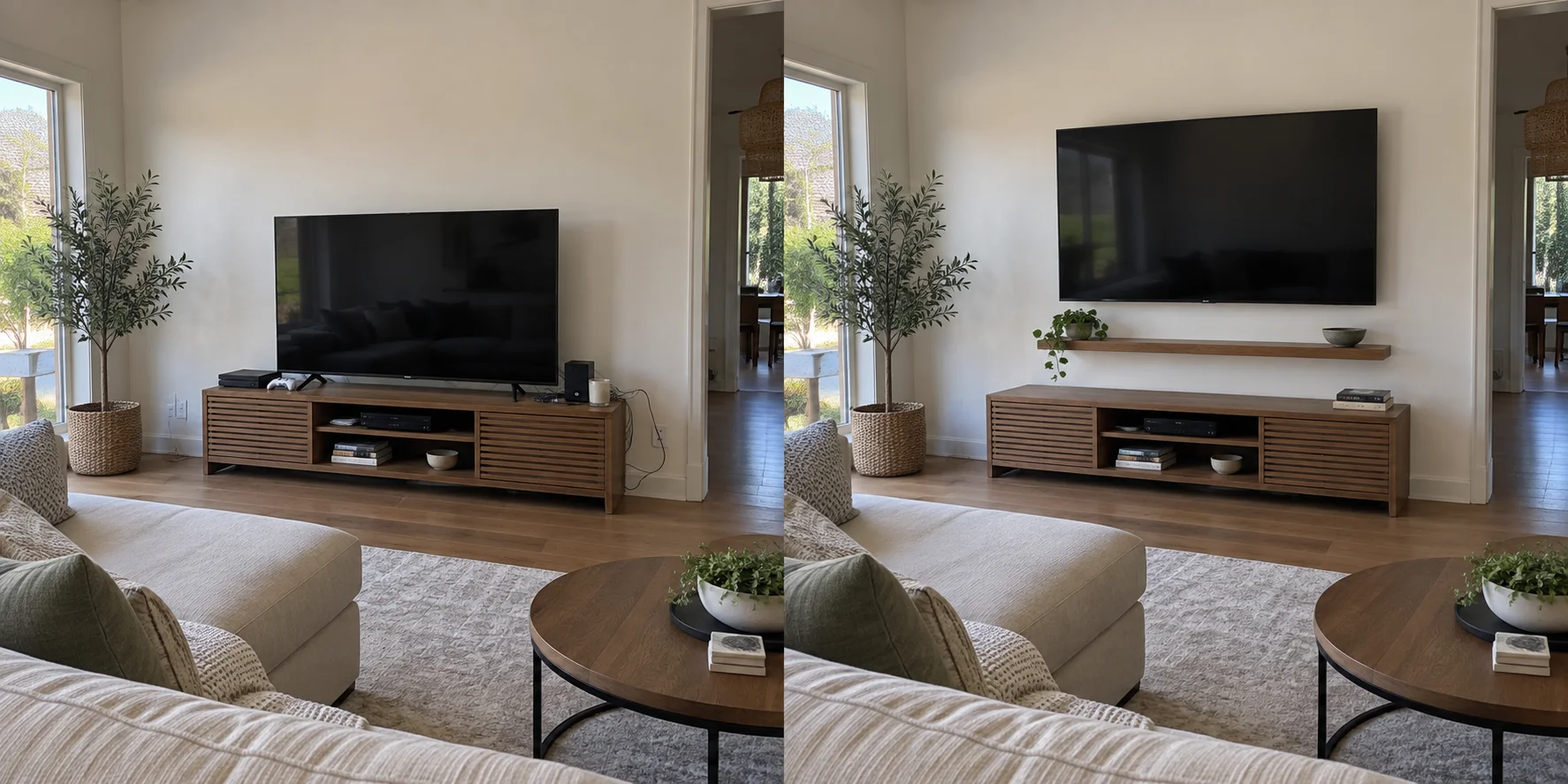
Fixed: one settled viewing direction
A fixed mount holds the television close to the wall without everyday angle adjustment. It suits a room where the main seats already face the screen comfortably. SANUS identifies a single viewing position and eye-level placement as a good match.
The tradeoff is flexibility. If you often rearrange the furniture, consider whether the television’s resting direction would still work. A close fit against the wall is most useful when that position already serves your regular seats.
Tilt: adjust the vertical angle
A tilting mount lets the screen angle upward or downward. Consider it when the viewing direction stays consistent but a vertical adjustment would help. SANUS describes tilt as a way to adjust for reflections from windows or lights.
Our practical suggestion is to observe the room at your usual viewing times. Afternoon daylight and evening lamps may create different reflections. Decide whether vertical adjustment addresses the problem or whether you also need to turn the screen sideways.
Full motion: serve different seating areas
Full-motion mounts can extend, swivel and tilt. They become useful when you regularly turn the television toward another seating area or need flexibility around a corner arrangement. SANUS lists both situations in its OLF18 guidance.
Consider the routine as well as the feature. Decide who will reposition the screen and whether it will usually return against the wall afterward. If no one uses the second viewing direction, the extra movement may not help.
Check the space that movement requires
Extension and turning angle work together. SANUS explains that moving a screen farther from the wall can allow a wider turn. Vogel’s says the available angle depends on both the mount and television size. Compare the particular product’s folded depth, extension and turning specifications.
A practical application is to consider the screen’s whole path. A nearby cabinet, perpendicular wall or doorway can make an adjustment impractical. Ask the installer to verify clearance throughout the intended movement, including the extended position.
Make the choice around everyday use
Use these questions to choose a category. Then confirm the exact product and installation against the TV and mount manuals. Include attached accessories when checking capacity; Vogel’s specifically counts a mounted soundbar and its bracket.
- Do your regular seats face one screen position, or would you use a second direction most days?
- Would an up-and-down adjustment address the reflection or viewing-angle problem?
- Can an extended screen occupy that space without obstructing furniture, doors or walking routes?
- Has the usable turn been checked for your television’s size?
Sources & product details
Manufacturer instructions for your exact product take precedence over general planning guidance.