Paint & finishes · 3 min read
Repainting the front door? Plan the finish, sun exposure and closing time
A front-door repaint needs more planning than picking a color. The existing material and finish affect the coating choice, while sunlight, a storm door and the need to lock up affect the work schedule. Before ordering paint, agree on what is being painted and when the door can safely return to normal use.
Start with the door you already have
Look for an existing invoice, product record or care guide that identifies the door. Write 'unknown' if you cannot tell the material or coating. A wood-grain appearance alone is not enough to choose a finishing system.
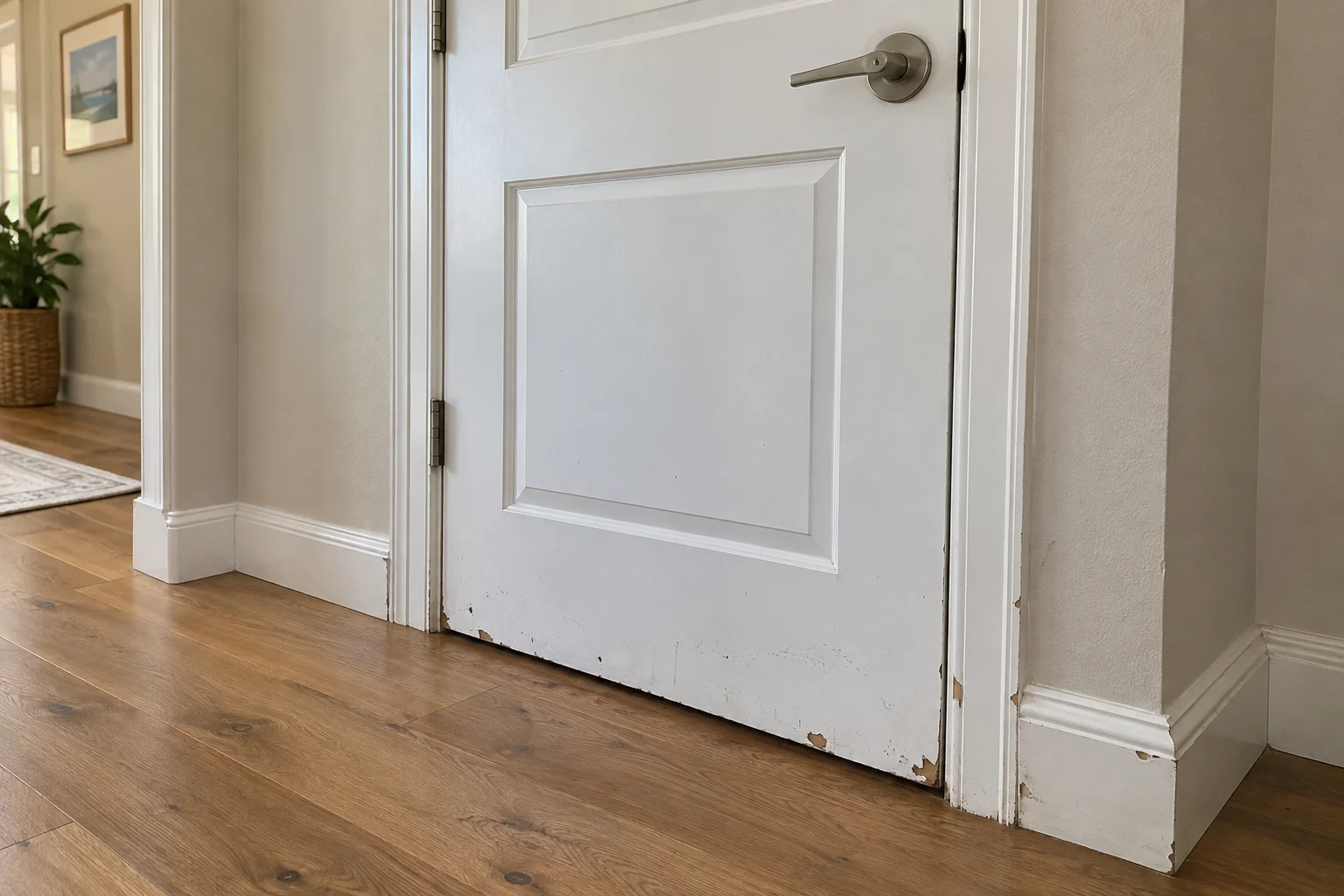
Masonite advises using maintenance guidance for the specific door material and finish. Its wood-door guidance identifies flaking, cracks and discoloration as signs worth inspecting; its steel-door guidance also addresses rust. Photograph those areas from an ordinary standing position and describe any previous refinishing you know about. A color change and a damaged surface may need different scopes.
Spell out which surfaces belong in the quote
'Paint the front door' could mean only the outside face or a larger entrance refresh. Mark the requested surfaces in a photo so that the estimate and finished-work review use the same scope. Ask how the chosen finishing system treats edges and contact areas; do not assume every visible surface takes the same product.
- Outside face, inside face and any edges included in the proposed work.
- Frame, trim, sidelights and separate glass-surround materials.
- Hardware protection or removal, plus any separately agreed hardware replacement.
- Existing peeling, rust, damaged trim, sticking or weatherstrip problems that need assessment.
Check sun and storm-door restrictions before choosing a dark color
Tell the painter whether the entrance has an overhang, a storm door or strong afternoon sun. Include a photo of the whole entrance as well as the door. The exposure information belongs with the product model when the color is reviewed.
Manufacturer rules differ. For example, Masonite's support guidance allows vented storm doors with its fiberglass or steel doors only under stated conditions, excluding dark finishes and high-heat or intense-sun exposure. It advises against storm doors with its wood doors. Treat that as a reason to check your own door's instructions, not as a rule for every brand or a promise that a lighter color solves every heat concern.
Plan for closing and locking, not just the last brush stroke
Valspar describes blocking as painted surfaces sticking together. Insufficient drying or curing before contact, early recoating and hot, humid or damp conditions can contribute. A surface that feels dry does not establish that it is ready to press against another surface.
Ask for the actual coating's drying, recoating and return-to-contact guidance. Agree on who will be home, whether another entrance is usable and how the property will stay secure throughout the work. Keep exits usable. Do not plan around leaving the front door unsecured or assume every coating permits normal closing the same evening.
Send one complete repaint request
Send Coast & Craft your city, door photos, any model or finish records, preferred color and the surface list. Add your access constraints and the time you need the entrance back in normal use. Exterior finishing availability, surface preparation and any specialist repair need confirmation before work is agreed. A specific request makes it easier to separate the repaint from door repair or a larger entry refresh.
Sources & product details
Manufacturer instructions for your exact product take precedence over general planning guidance.