Painting · 3 min read
Painting stained wood trim: agree on the finish before work starts
Stained wood trim can be painted, but changing brown woodwork to a light color is more than choosing a white paint. The existing finish, the condition of the trim and the result you want all affect preparation. Settle those details before treating the job as a simple color change.
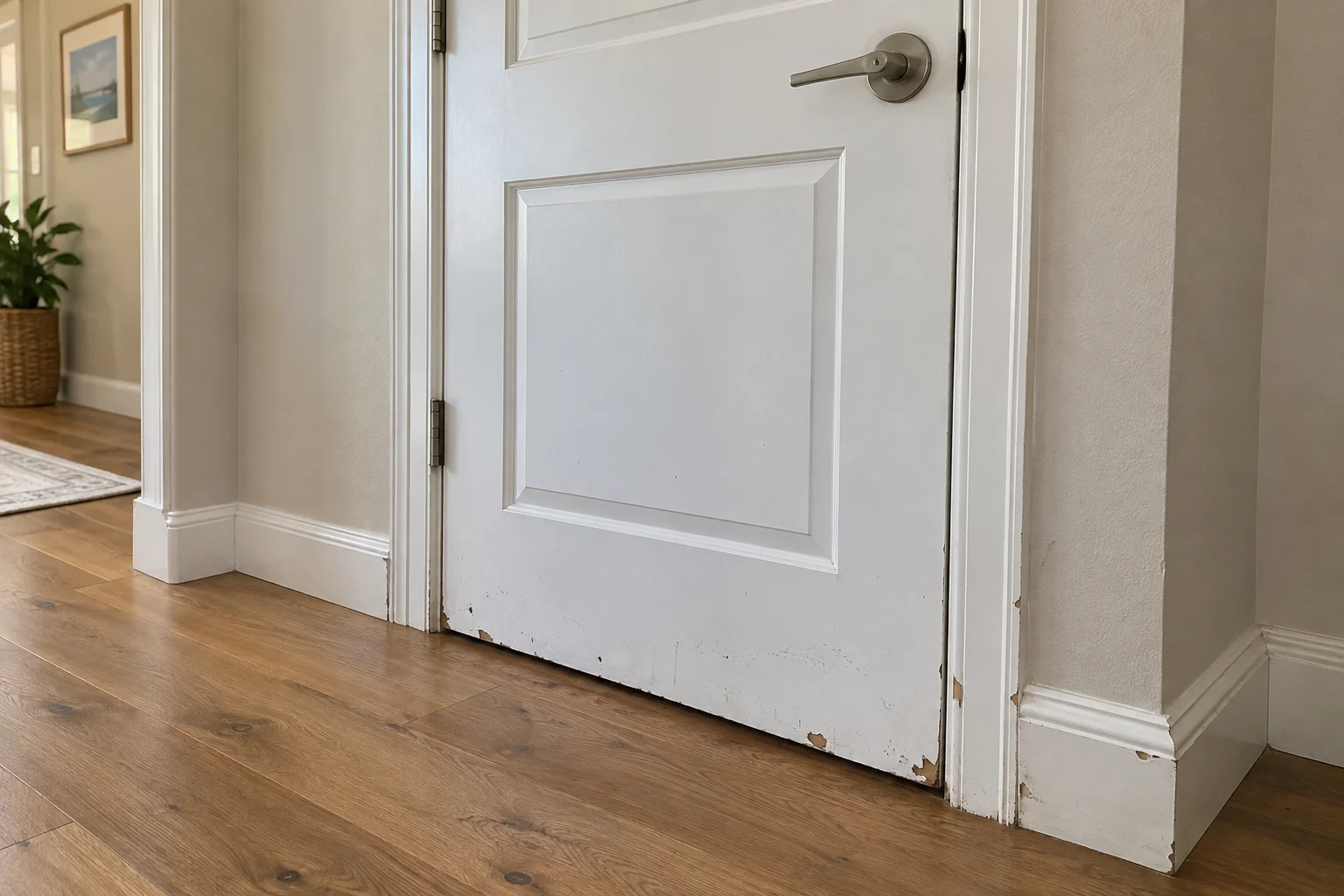
Find out what is on the wood
Gather any old stain, varnish or coating labels and note what you know about previous work. Photograph a typical section plus peeling, worn, greasy or discolored areas. If the finish is unknown, say so; a dark or shiny appearance is not a reliable product identification.
Sherwin-Williams says stained wood can be painted, but calls for appropriate preparation and distinguishes between water-based and oil-based stains. Have the painter assess the complete existing coating, including any clear finish, and select compatible products. Do not buy a primer solely because it says it works on wood.
Separate adhesion from stain blocking
A coating needs to hold to the prepared surface as well as produce the intended color. Benjamin Moore's trim guidance identifies glossy finishes as needing preparation and calls for priming repairs. Sherwin-Williams also warns that an inadequately prepared stained surface can bleed through paint.
Ask the painter how the proposed system addresses both concerns. Record which primer and finish paint are intended, what condition would require a different approach, and whether a small trial will be assessed before the remaining trim is coated. A promise of extra finish coats does not explain the preparation plan.
Decide what the finished surface should look like
Use a representative section to agree on color, sheen and acceptable surface detail. State whether visible grain texture, old nail repairs or small dents may remain, or whether you expect broader filling and smoothing. Ask the painter to price that expectation explicitly instead of assuming every painted surface will look like new manufactured trim.
Mark the sample location and any trim that must remain stained. Include transition points at doorways and where painted casing meets an unpainted door. Review the sample in the room's normal lighting after the chosen products have dried as directed; agree on changes before expanding the work.
Resolve old-coating concerns before disturbing it
Provide the home's approximate construction date and any known coating history before preparation starts. For pre-1978 homes, EPA recommends a lead-safe certified contractor for renovation, repair and painting. Disturbing old lead-based paint can create hazardous dust. Do not sand or scrape an unknown old coating to identify it; arrange the appropriate assessment first.
Make one clear trim request
Send Coast & Craft your room and trim list, existing-finish information, photos and desired sample result. Ask the proposal to distinguish coating preparation, filling or other repairs, and any trim replacement. Confirm the accepted scope and required qualifications before work is scheduled.
Sources & product details
Manufacturer instructions for your exact product take precedence over general planning guidance.