Planning · 3 min read
Loose cabinet hinge or damaged hinge hole?
A crooked cabinet door does not tell you which part needs attention. The hinge may need adjustment, its connection may be loose, or the material holding it may be damaged. Locate the movement before buying hardware or changing screw positions.
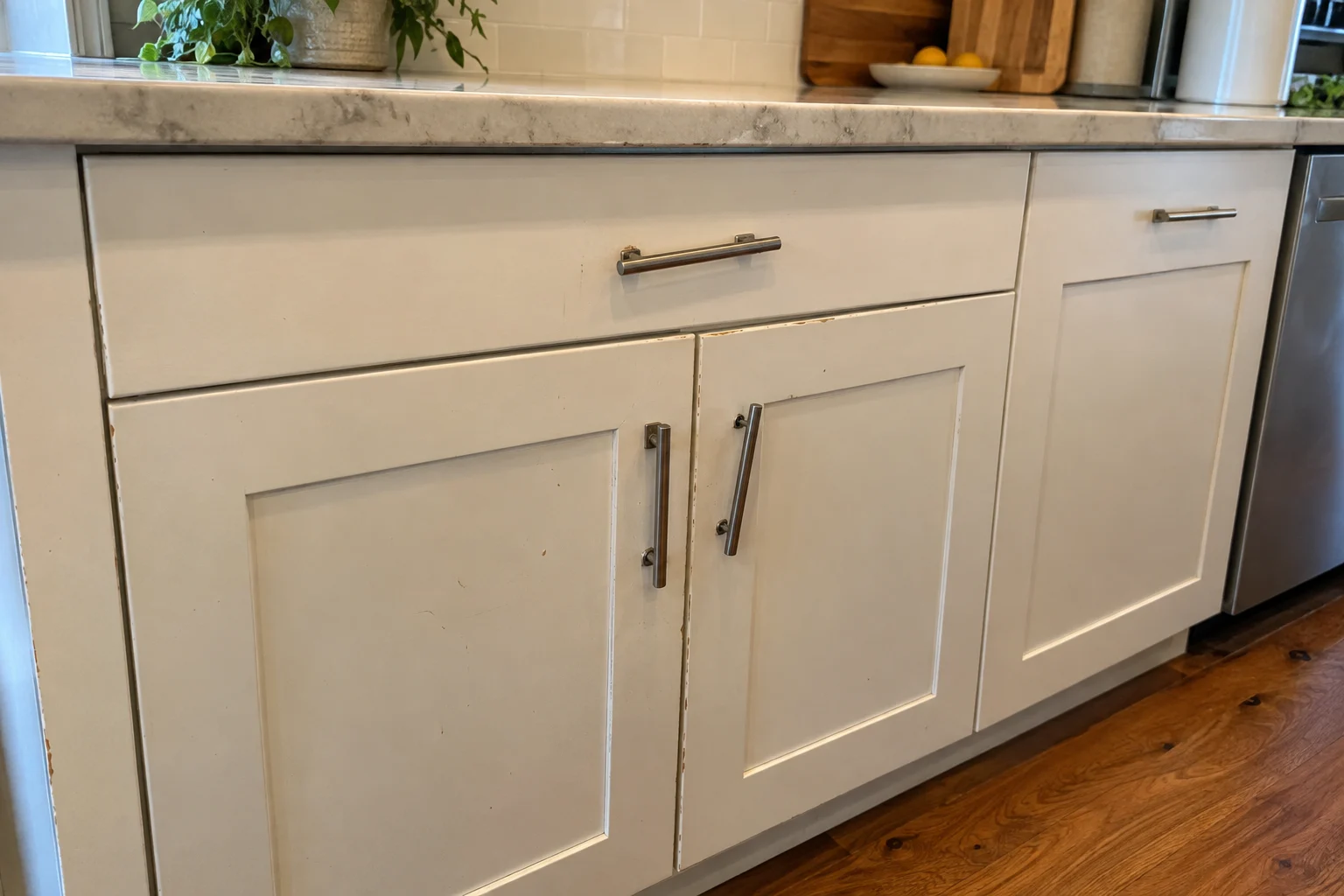
Watch the attachment points
If the door remains securely attached, open it slowly while watching each hinge. On a concealed hinge, distinguish the cup seated in the door, the moving arm, and the mounting plate attached to the cabinet. Describe which connection shifts relative to its surroundings; normal hinge articulation is different from a plate lifting off the cabinet side.
A consistent uneven gap with stationary attachments suggests an alignment question. Visible movement at a fastening point suggests that attachment needs inspection. These are planning clues, not a diagnosis. If hardware is pulling away or material is breaking loose, leave the door undisturbed and arrange an assessment before further testing.
Separate adjustment from material repair
Blum’s CLIP top guidance describes side, height and depth adjustment, alongside several attachment methods. That distinction matters: an adjustment control changes door position, while an attachment holds hardware in place. Identify the model and its instructions before turning screws; a screw’s location alone does not establish its purpose.
Photograph cracks, crumbling edges, enlarged holes or a lifted surface around the mounting area. Report whether a previous tightening attempt helped briefly or never held. Damaged material needs its own repair assessment. A longer screw, filler or generic repair plate cannot be selected from the symptom alone; the panel material, thickness and remaining sound attachment area matter.
Build a useful photo and symptom record
Hettich requests overall, installation and detail photos when helping identify an unknown fitting. For a repair request, assemble this short record without removing a door solely to obtain a picture.
- A closed-door view showing its gaps beside neighboring fronts, plus an open view showing every hinge.
- Close-ups of the door-side cup and cabinet-side mounting plate, including visible damage and stamped names or numbers.
- The affected door’s location, approximate dimensions and hinge count; include the cabinet maker if known.
- A plain description: rubbing at the top, dropping when opened, clicking at one hinge, or a plate visibly moving. Note when it began and any earlier repair.
Check replacement compatibility before ordering
A similar-looking hinge is only a starting point. Blum’s range includes different cabinet constructions, door thicknesses, opening angles and corner arrangements, and its identification guide considers both appearance and reference numbers. Record whether the door sits inside the opening or overlaps it, and show whether the cabinet has a face frame.
The mounting plate also needs identification: Hettich lists different plate distances, fastening options and adjustment designs. Ask the supplier to confirm the hinge-and-plate combination, existing drilling pattern and required clearances. Send Coast & Craft the photos and observations together so the request can distinguish alignment work, hardware replacement and repair of the supporting material.
Sources & product details
Manufacturer instructions for your exact product take precedence over general planning guidance.