Flooring & home repairs · 3 min read
Squeaky floor? Map the noise and access before choosing a repair
A squeak in the same spot does not identify which part of the floor needs repair. The visible covering, its attachment and the supporting layers beneath it are separate questions. Start with a simple location record and the floor's history before asking someone to secure a board or replace the finish.
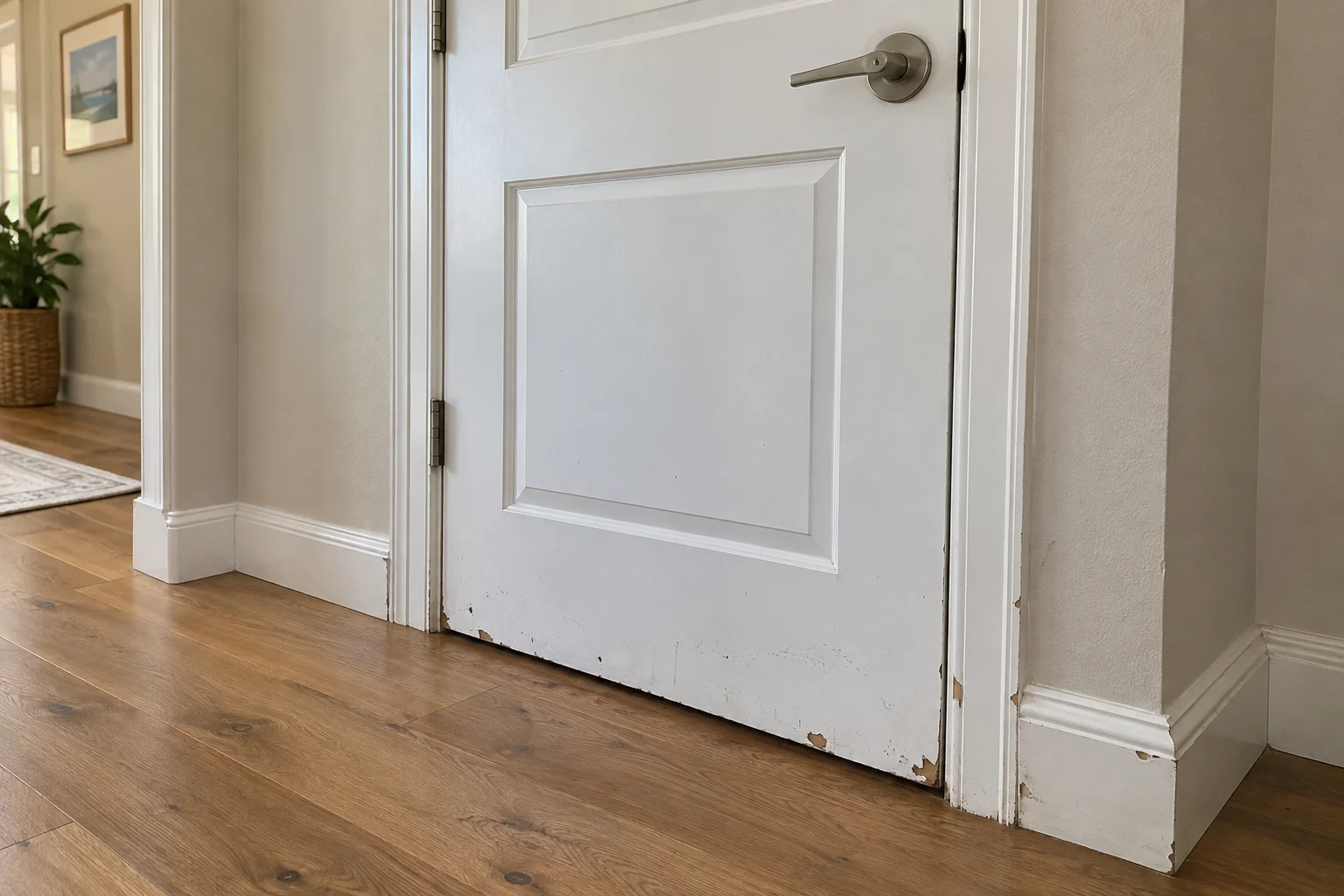
Locate the sound without stress-testing the floor
Use what you have noticed during ordinary walking. Mark the location on a room photo or simple sketch, using a doorway or cabinet as a reference. There is no need to attach tape to an unfamiliar floor finish or repeatedly make the noise for a recording.
- Is it one spot, a strip beside a wall or several areas across the room?
- Does it occur during a normal step, or when someone walks in the adjacent room?
- When did it begin, and has it changed since installation or another repair?
- Have you already noticed gaps, raised edges, water staining or unusual movement nearby?
Identify the covering and what is known beneath it
Find a leftover box label, invoice or installation record. State whether the surface is carpet, solid wood, engineered wood, laminate, vinyl or tile; if uncertain, send a photo and say so. Include the installation method only if documented. Do not lift an edge or remove a transition to find out.
Bruce's hardwood guidance identifies floorboard movement, loose fasteners and subfloor problems among possible causes of squeaks. APA explains that noises can also originate at connections between subflooring, underlayment and framing. That is why a noise heard at the surface does not prove that replacing its covering will solve it.
Include seasonal and moisture history
For wood floors, NWFA explains that moisture gain can cause swelling, while moisture loss can cause shrinkage. Tell the assessor whether the noise changes with dry weather, heating or air-conditioning use, and disclose leaks or recent wetting. A seasonal pattern is useful evidence, not a diagnosis that the floor is harmless or needs a humidifier.
Share any existing room humidity records and the flooring manufacturer's care requirements. Do not change humidity to a generic target just to silence a noise. If an area has suddenly become soft or sagging, avoid it and arrange prompt qualified assessment instead of bouncing on it to test its strength.
Make inspection access part of the request
Say what is below the room if you know: a slab, crawlspace, unfinished area or finished ceiling. Mention underfloor heating and other concealed services shown in your records. Do not enter a crawlspace, cut an inspection opening or drive screws through the floor to investigate.
APA advises that careful inspection is usually needed to determine the cause and solution. Ask what can be assessed without disturbing finishes and what further access might be needed. If opening a floor or ceiling is proposed, agree who restores the covering, trim, texture and paint before that work begins.
Agree on findings before a repair
Ask the assessor to explain the likely source, what remains uncertain and which area the proposed work covers. Separate a flooring repair from any structural assessment or moisture investigation. Keep the product information and findings with your home records.
Send Coast & Craft the room photo, location sketch, history and access details for scope review. Confirm whether the accepted visit is an assessment, a defined repair or a specialist referral before arranging it.
Sources & product details
Manufacturer instructions for your exact product take precedence over general planning guidance.