Drywall & wall repairs · 3 min read
Drywall nail or screw pops: why another coat of filler may not be the whole repair
Small raised circles on a wall can prompt a request to fill and repaint the spots. If they are nail or screw pops, the repair question also involves the drywall's attachment. A spot that returns after painting deserves a different conversation from a dent left by moving furniture.
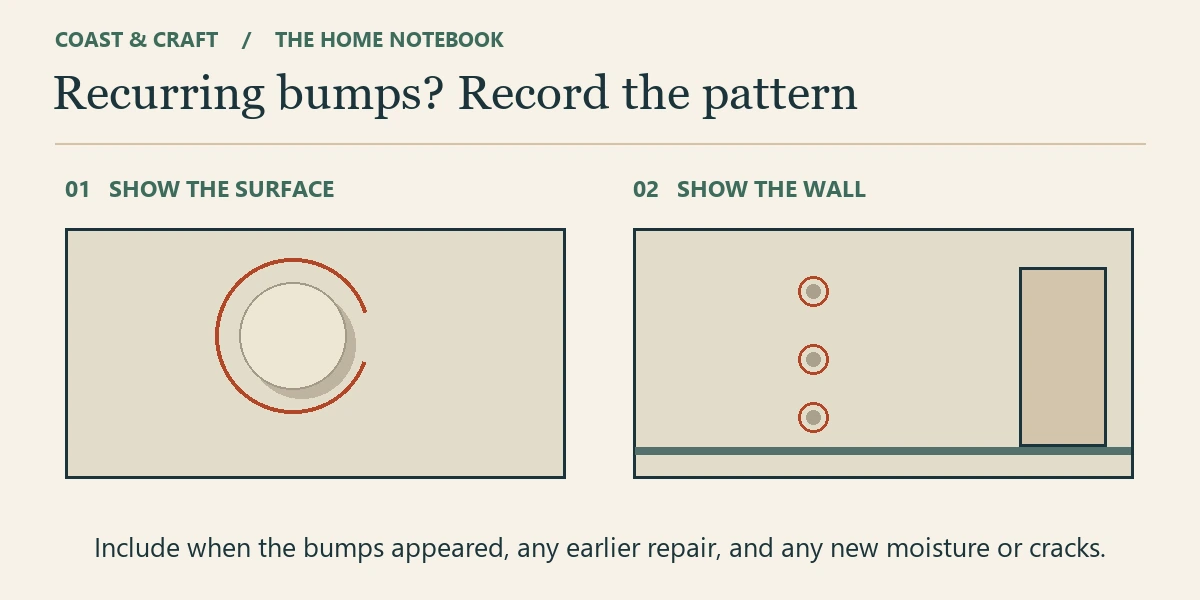
Describe the shape without deciding the cause
Is the mark a depression, a raised bump, a ring of cracked finish, or exposed metal? Note that distinction without scraping the area to find out more. The label 'nail pop' in a message does not confirm which fastener or wall system is present.
USG's installation and finishing guide gives different repair treatments for dents and popped nails. Its popped-nail treatment includes attention to fastening before refinishing. That distinction matters when comparing a quote for filling blemishes with one that addresses the panel attachment. A photograph cannot establish whether the drywall is secure behind the paint.
Give a returning spot its own history
National Gypsum explains that framing lumber shrinking as it dries can cause fasteners to become visible through the finish. Its guidance also emphasizes firm panel contact with framing. These are possible explanations to assess, not proof that every circular mark means the house is settling.
Write down when the spots first appeared and what an earlier repair included, if known. 'Filled and painted twice; the same three bumps returned' is more useful than 'wall needs touch-up.' If the home or wall is newly built, mention that too. Ask whether the conditions are ready for a lasting finish repair; do not apply a blanket waiting period to unexplained damage.
Separate attachment work from finishing
Have the repairer identify whether the scope is surface repair alone, securing the affected drywall and refinishing, or investigating a broader problem first. Leave the fastening method and concealed conditions to that assessment; do not hammer down or drill beside a bump to test it.
For a hypothetical row of six spots, ask which locations are included and how any additional damage discovered during work would be handled. Then confirm texture, primer and paint separately, including where repainting stops. A small visible circle does not define the final painted area.
Report moisture or changing damage before cosmetic work
Mention widening cracks, stains, suspected dampness or visible sagging with the initial request, rather than asking only for spot filling. Keep clear of a sagging ceiling and seek a qualified assessment. Photos cannot rule out a problem beyond the finish.
USG's water-damage guidance calls for identifying and addressing the moisture source, with affected-material decisions made by qualified people. Do not cover a damp or suspect area with filler and paint while arranging that assessment.
Send a short repair record
Send Coast & Craft the following for a scope review; include ceiling height or difficult access without climbing for closer pictures.
- A room view showing how the spots are distributed, plus a clear close-up from a safe position.
- The approximate number of spots and whether they are returning locations or new ones.
- Dates of earlier patching or painting, and any known leak or recent wall work.
- Nearby changes and the texture and painting you want included.
Sources & product details
Manufacturer instructions for your exact product take precedence over general planning guidance.