Paint & wallpaper · 3 min read
Paint or wallpaper for an accent wall? Start with the wall
It is easy to choose a wallpaper pattern before noticing the wall underneath it. Look at the surface, the room and your deadline first. Those three things make the decision more practical.
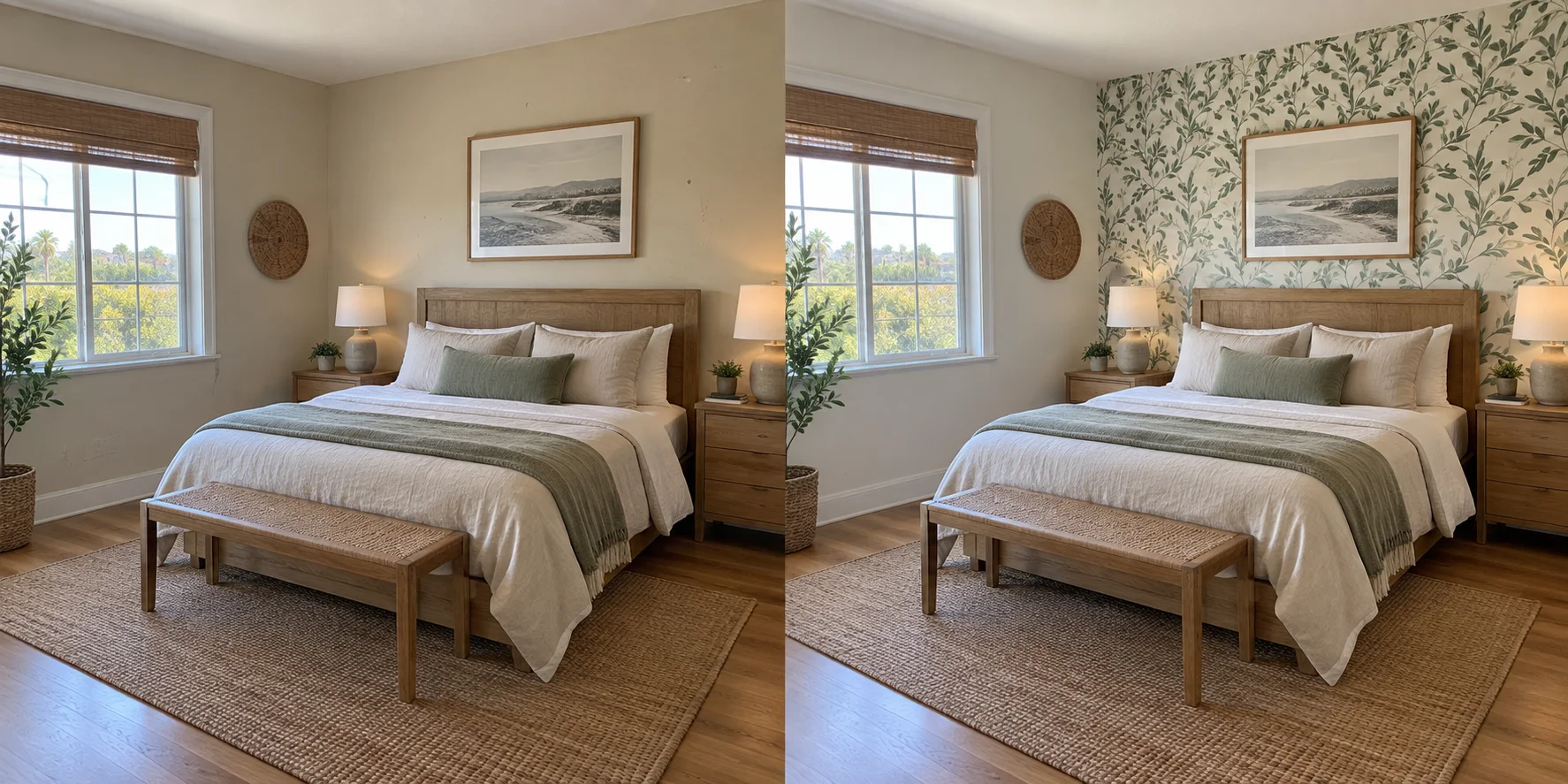
Pick the effect you want to see
Paint gives you a color field; wallpaper adds a pattern or a particular surface effect. Decide which one solves the room you have. If the furniture, rug and curtains already compete for attention, a quieter wall may work better. A plain room may be the place for a pattern you want to notice.
View a sample in the actual room during the day and under your evening lighting. Compare it with the trim, floor and furniture rather than choosing only from a phone screen. This is a design choice, not a promise that one finish increases your home’s value.
Check texture, damage and the existing finish
Send a close-up photo with light falling across the wall, plus a wider shot that shows the whole area. Mention peeling paint, cracks, previous wallpaper or suspected moisture. Preparation should be discussed before an installation date is promised.
York’s peel-and-stick guidance calls for a suitable clean, smooth and dry surface, and cautions against incompatible finishes and textures. Other wallcoverings have different requirements. Check the instructions for the exact paper you want, not just the general product category.
Leave room in the schedule for preparation
A wall that has just been painted may not be ready for wallpaper. Dry to the touch and ready for an adhesive are different milestones. York specifies at least four weeks of curing for newly painted surfaces before applying the peel-and-stick products covered by its guide.
Tell the team when the wall was last painted and which paint was used, if known. Follow the chosen wallpaper and paint manufacturers’ instructions when planning the sequence. A preparation visit and a later installation can be more realistic than trying to finish everything at once.
Compare a complete scope
A roll price and a can price are not complete project estimates. Ask what preparation, materials, protection, removal, cleanup and finishing are included. For wallpaper, provide the roll dimensions and pattern details so the required quantity can be checked.
For painting, specify whether trim, ceilings or adjoining walls belong in the job. For either finish, point out shelves, curtain hardware and items that need to come down or go back up.
What to send for an Irvine room refresh
Start with a simple description of the result you want. You do not need to have every design decision finished before asking about the work.
- Your city, the room and your preferred timing.
- Wall width and height, with any hard-to-reach areas noted.
- A full-wall photo and a close-up of its texture.
- Paint color or wallpaper product link, if selected.
- When the wall was last painted and any known damage.
- Items to remove or reinstall, plus any related tasks for the same visit.
Keep the final decision concrete
Before you approve the job, make sure the chosen product, wall preparation and included surfaces are written into the scope. That shared reference is more useful than a general request to “refresh the room.”
Sources & product details
Manufacturer instructions for your exact product take precedence over general planning guidance.