Wallpaper · 3 min read
Peel-and-stick wallpaper on textured walls: what to check first
A textured wall may need preparation before peel-and-stick wallpaper can go up. Start with the selected product's surface requirements, not a photo of a similar finished room. The useful question is whether that paper suits your wall as it is, or whether changing the surface belongs in the job.
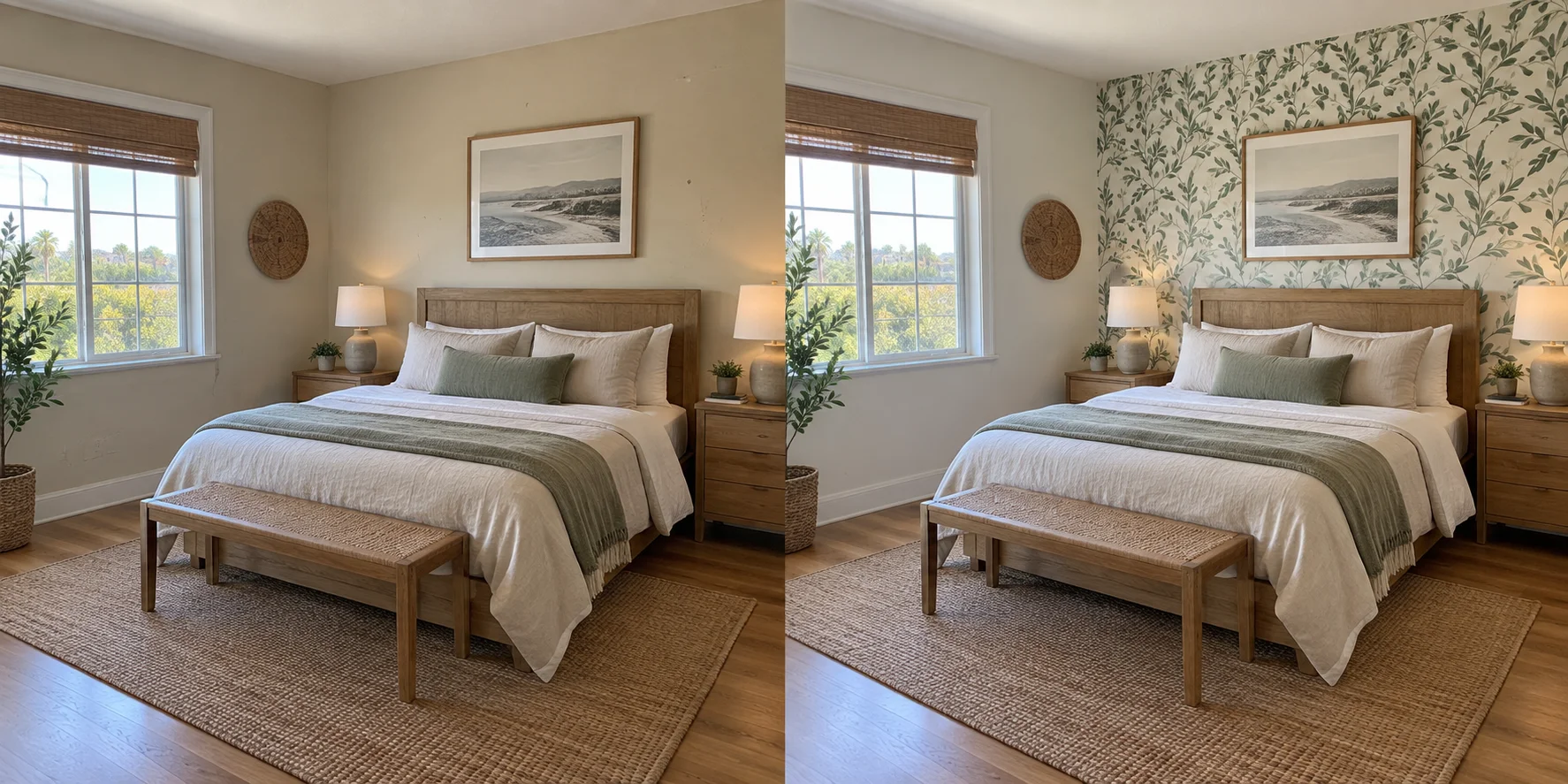
Identify the texture before ordering
Take a full-wall photo and a close-up with light coming across the surface. Show a representative area as well as repaired patches. Send these with the wallpaper link so the installer can compare the actual finish with the manufacturer's requirements.
WallPops' NuWallpaper guidance permits slight drywall or paint texture but excludes orange-peel, knockdown and other textured finishes. Spoonflower warns that even slight texture can prevent full adhesion of its Peel and Stick paper. Those are different limits; approval for one product is not approval for another.
Separate texture from paint compatibility
A smooth-looking wall still needs its paint checked. Save the paint name, finish and application date if known. Tempaper recommends sound, smooth, primed-and-painted surfaces with eggshell, satin or semi-gloss finishes, and checking paint curing specifications; its guidance recommends waiting at least 30 days after painting.
Spoonflower also specifies at least 30 days for painted or primed walls and flags washable, scrubbable and No-VOC paints as unsuitable for strong bonding. Ask the selected paper's supplier about the actual coating. Do not translate a dry-to-touch paint label into permission to wallpaper immediately.
Give the sample a specific job
Once the supplier considers the surface suitable, use the actual product sample and its preparation instructions. Ask how long to leave it before assessing adhesion and how to remove it. Record the test location and date so the result can inform the estimate.
Look for visible texture through the paper, lifting edges and a finish you dislike under the room's lighting. Photograph any change. If the product excludes your wall type, pause for a preparation plan rather than using a briefly attached sample to approve the whole room.
Compare preparation with keeping the painted wall
Ask for an estimate that separates surface preparation, the required coating and curing time, and wallpaper installation. Decide whether the pattern is worth that complete scope. If you prefer to retain the existing texture, compare a painted refresh or another suitable surface for the wallpaper.
Keep removal expectations in the decision. Spoonflower notes that the surface may need touch-up after removal depending on conditions and preparation. Removable wallpaper is not a promise that every underlying paint finish will remain unchanged.
Send a request that answers the fit question
Send Coast & Craft these details before buying the full order:
- Wallpaper product link, wall dimensions and texture photos.
- Paint details and age, or a note that the coating is unknown.
- Any peeling, damp areas, previous wallpaper or repaired patches to assess.
- Sample results and whether smoothing, painting and later removal belong in the proposed scope.
Sources & product details
Manufacturer instructions for your exact product take precedence over general planning guidance.