Doors & hardware · 3 min read
Pocket door stuck or rubbing? Include hardware access in the repair plan
A pocket door hides much of its hardware inside the wall. When it drags or stops halfway, the repair question includes how that hardware can be reached. Establish the installed system and likely access before approving replacement rollers or assuming the wall must be opened.
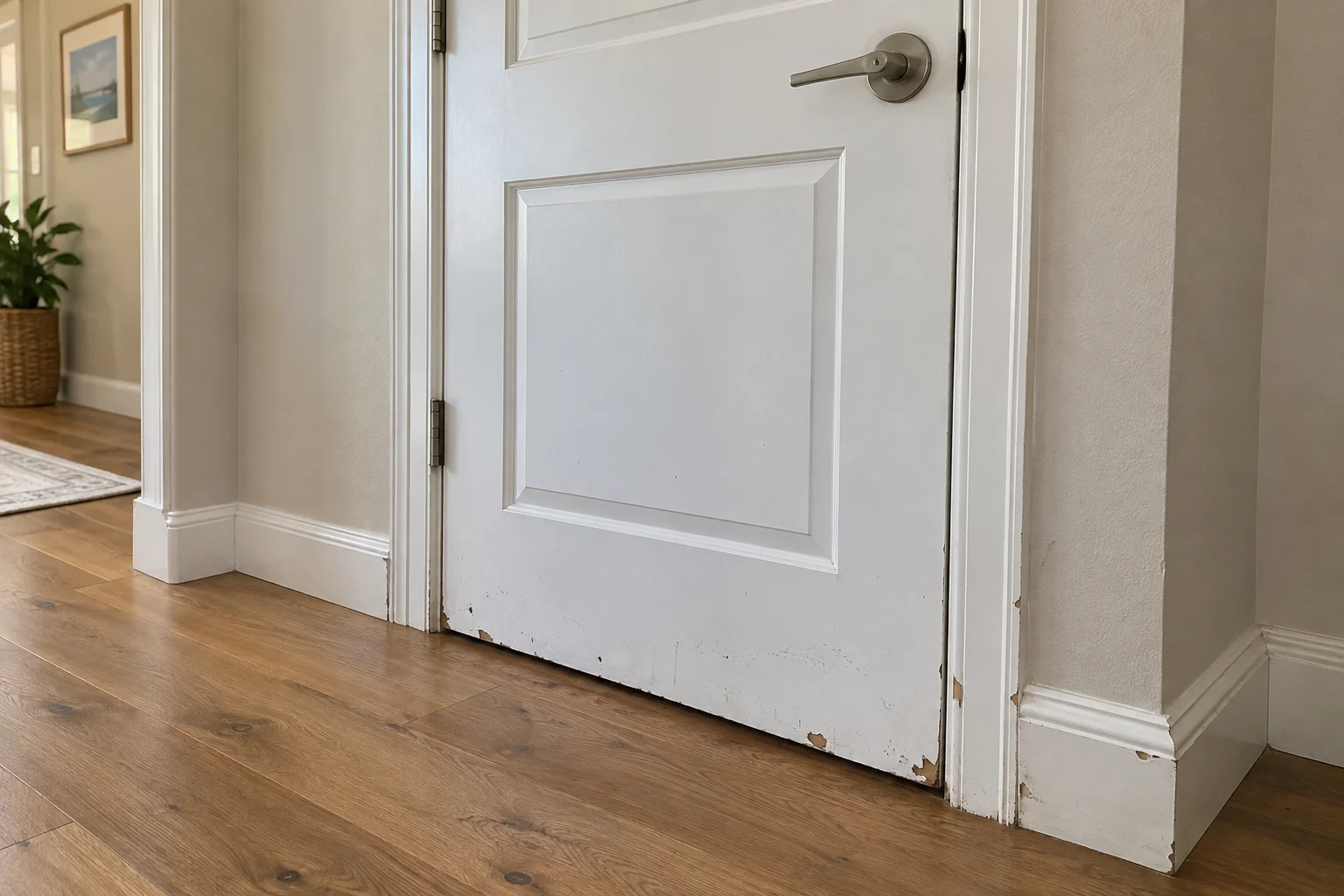
Locate the problem from what you have already noticed
Describe whether the door rubs the floor, scrapes near the pocket entrance, hangs unevenly or catches as it disappears into the wall. Mention new flooring, recent painting or other work beside the pocket. These observations guide an inspection; they do not prove that a roller has failed.
Take a wide photo of the doorway and close views of existing scrape marks and accessible hardware. Do not force, lift or detach the panel to reveal hidden parts. If it is leaning, loose or partly off its support, stop using it and keep people clear.
Identify the track family before ordering parts
Find any builder records, installation paperwork or product labels already visible. The door slab's brand may not identify the frame and track system. Have the assessor confirm the track, wheel hangers, door attachment plates and lower guides as separate components.
Johnson lists different thickness and weight specifications for its 100PD, 111PD and 200PD families. Its 100PD page also limits the 1121 hanger plate to the 1120 or 1125 hanger. These are examples of why a familiar-looking wheel or a kit with the right door width is not enough to establish compatibility.
Separate adjustment from damaged hardware or frame conditions
Ask what the inspection found and which component the proposed work addresses. CS Cavity Sliders identifies frame alignment and its adjustable T-guide as factors in avoiding rubbing. That does not mean every scraping door needs the same adjustment or replacement part.
If the door has soft-close hardware, say whether the problem occurs during the main travel or only near an end. Include the lock and edge pull if they also cause trouble. List restoring those functions separately rather than assuming new rollers resolve every symptom.
Set an access boundary before repairs begin
CS Cavity Sliders describes removable jamb trim and a notched track that allow carriage servicing without cutting into drywall on its system. Have the repairer check whether your actual installation provides such access. A service feature advertised for another frame is not a promise about yours.
Ask which of these scopes applies, and require a revised explanation before work expands beyond the agreed access:
- Adjustment through an existing accessible area.
- Door and removable-trim handling to reach compatible replacement hardware.
- Additional wall access or frame work, with the reason, responsible trade and restoration identified.
Include reassembly and the finished result
Confirm who reinstalls the trim and restores any disturbed finish. Ask for normal travel, clearance and any agreed latch or soft-close function to be checked afterward. Send Coast & Craft your photos, available product information and symptoms so the team can confirm the accepted scope or appropriate specialist before arranging a visit.
Sources & product details
Manufacturer instructions for your exact product take precedence over general planning guidance.