Painting · 3 min read
Can your kitchen cabinets be repainted? Check the surface and the scope
Cabinet painting can be a practical color change when the existing surfaces are suitable and the cabinets still work for you. First establish what the doors are made of and whether their finish is secure. Peeling coverings, damaged panels and a layout you dislike need a different conversation from a sound kitchen that simply needs a new color.
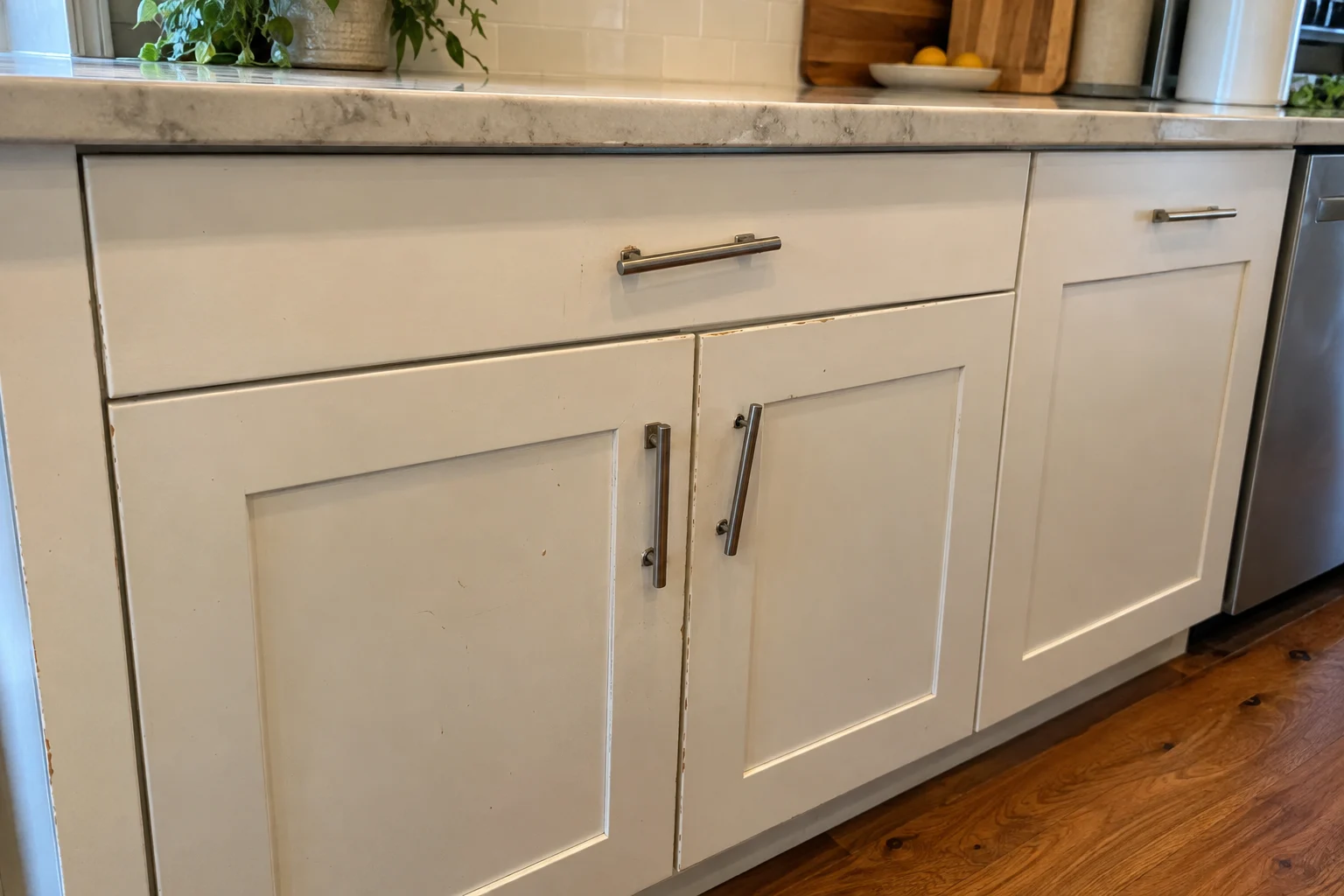
Identify the face, not just the cabinet color
A white cabinet might be painted wood, painted engineered board or a manufactured covering. Look for the original order or manufacturer label and photograph a door face, its back and an edge. Do not peel or scrape the finish to identify it.
MasterBrand describes thermofoil as PVC film bonded over an MDF component. That is a different surface from painted wood. Ask the painter to verify the material and the proposed coating's compatibility rather than treating every smooth cabinet as the same job.
- Previously painted wood: assess the existing paint's condition and compatibility with the proposed system.
- Laminate: ask for a preparation and coating specification for that laminate. Benjamin Moore publishes a laminate-painting method; this does not make every finish suitable without assessment.
- Thermofoil or an unknown wrapped surface: get explicit compatibility advice for the identified covering, especially if edges have lifted. Do not assume laminate guidance covers it.
Separate damaged material from an outdated color
Photograph flaking paint, lifting coverings, swollen edges and damaged hinge areas separately from the overall kitchen. Ask which parts are sound enough to coat and which need repair or replacement first. A new color does not settle those scope questions.
For its Cabinet Coat CC-65XX enamel, INSL-X calls for sound, clean surfaces and repair or replacement of seriously damaged or delaminated areas. Its preparation requirements vary with the substrate. Have the painter specify the actual products and any trial area; a generic promise to use cabinet paint is incomplete.
Count more than doors and drawer fronts
Use one kitchen photo to mark what changes color. A quote for fronts alone may leave visible cabinet sides or frames outside the work. Write down the boundaries:
- Door fronts, backs and edges, plus drawer fronts.
- Visible frames, end panels, island backs and toe kicks.
- Any crown molding, shelves or cabinet interiors included.
- Hinge repairs, replacement handles and old handle holes to address.
Plan removal, kitchen access and reinstallation
Benjamin Moore's laminate-cabinet guidance recommends removing doors and hinges for painting. Ask how your project will be handled: who labels and stores hardware, where doors will be finished, and who reinstalls and checks them. Confirm which cupboards must be emptied and what kitchen access remains during the work.
Get separate expectations for painting, reassembly and normal use, based on the chosen products. Review an agreed sample for color, sheen and visible surface texture. Do not assume a repainted cabinet will look identical to a new factory-finished door.
Send one complete cabinet request
Send Coast & Craft the cabinet photos, known material, approximate door and drawer count, desired color and repair list. Include the surfaces you want painted and your kitchen-access constraints. The team can review whether the requested work is suitable before confirming scope or a visit.
Sources & product details
Manufacturer instructions for your exact product take precedence over general planning guidance.