Cabinets & hardware · 3 min read
Replacing cabinet pulls? Measure more than the handle
Before ordering replacement cabinet handles, measure the existing mounting holes and check a sample against the cabinet. A pull can match the hole spacing yet leave old marks exposed or hit another handle when a drawer opens. Start with a small inventory of the layout you already have.
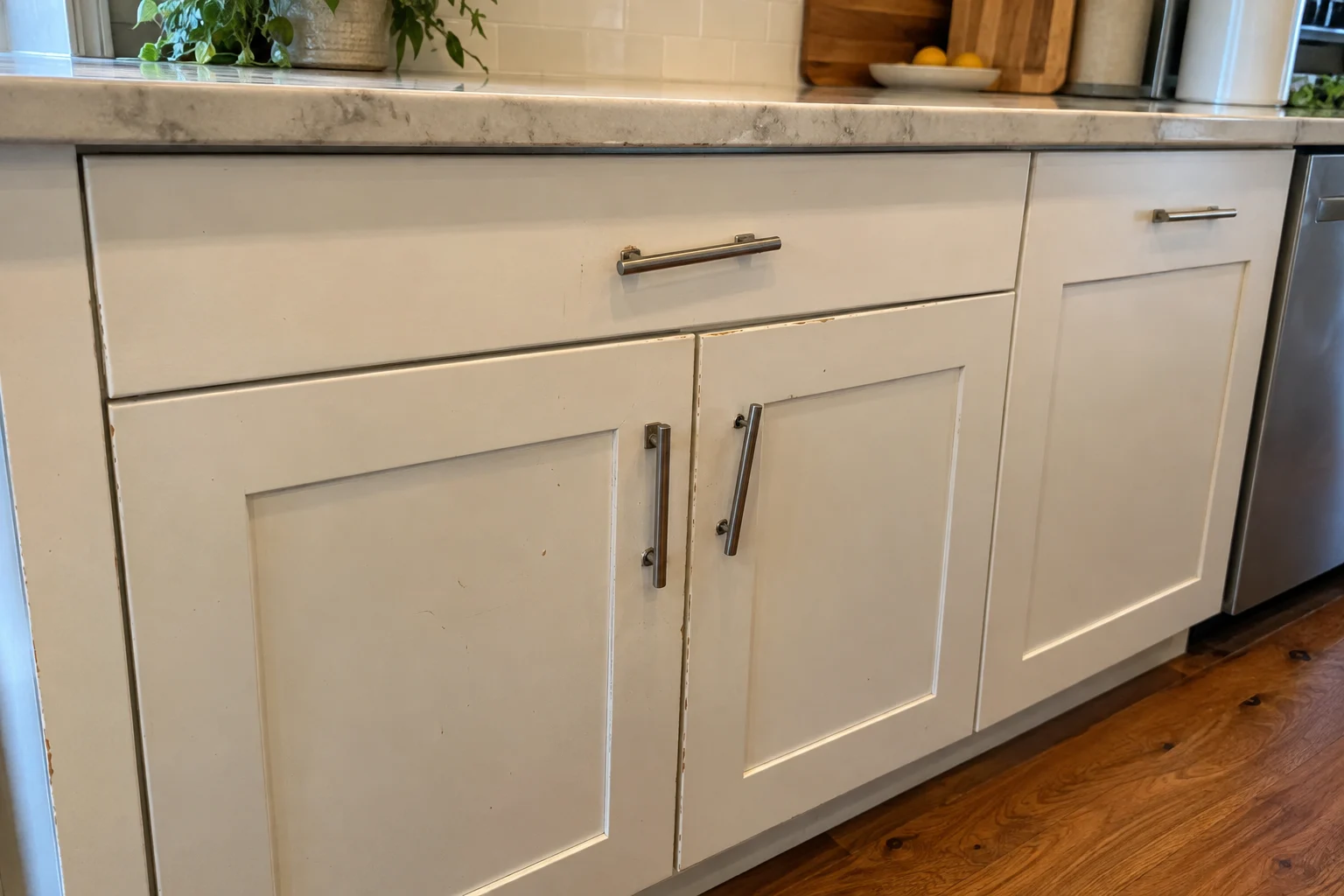
Separate hole spacing from overall length
Center-to-center is the distance from the middle of one mounting hole to the middle of the other. Overall length runs from one end of the handle to the other. Top Knobs identifies these as separate dimensions; matching the old handle's end-to-end length does not establish a fit.
Record each existing spacing with its units and count how many pulls use it. Check different drawer banks and tall doors rather than assuming the entire kitchen matches. If hardware conceals the holes, mark the measurement unconfirmed until one pull can be removed and checked. Keep knobs, which use a single mounting point, in a separate count.
Check what the screws pass through
Measure the material thickness at the mounting location. A drawer may have a decorative front attached to a drawer box, so the screw's route can differ from a cabinet door. Hickory Hardware notes that thicker fronts or drawer-box construction may require additional screw length.
Send a side view and a photo of the inside screw heads. Ask for the chosen pull's screw thread, length and mounting instructions to be checked against this construction. Keep the supplied screws with the sample; do not assume screws from the old handles suit the new ones.
Compare the area each base covers
When a sample location is uncovered, photograph any paint ridge, indentation, discoloration or extra hole. Compare that area with the new pull's bases, not just its mounting centers. A smaller base may leave the old outline visible.
Amerock describes backplates as an option for concealing holes left by previous hardware. Have the actual plate's coverage and compatibility checked. If the preferred handle requires relocated holes or exposes finish damage, include that repair in the scope before ordering.
Check the handles while cabinets move
Projection describes how far installed hardware stands out from the cabinet face. Compare the proposed handle with nearby walls, appliances and other handles, especially where two cabinet runs meet.
Have the sample checked with adjacent drawers extended and doors swung open through their normal travel. Check the space for your fingers as well. Record any conflict rather than applying one clearance number to every cabinet.
Approve a sample, then the full order
Use a sample to judge grip, finish and coverage in your own kitchen. Top Knobs offers samples of qualifying hardware; check the current program terms for your selection.
Send Coast & Craft the product link, quantities by spacing, mounting measurements and photos of tight corners. Ask for a sample fitting before the full batch is installed, with any hole repair, backplates or finish work identified separately.
Sources & product details
Manufacturer instructions for your exact product take precedence over general planning guidance.