Repair planning · 3 min read
Toilet keeps running or refilling? Start with the pattern
A toilet that never stops running and one that briefly refills when nobody has used it give different clues. Notice when the sound starts, whether it stops, and where you see water before buying parts. A symptom helps narrow the assessment; it does not identify the replacement part by itself.
First, check where the water is
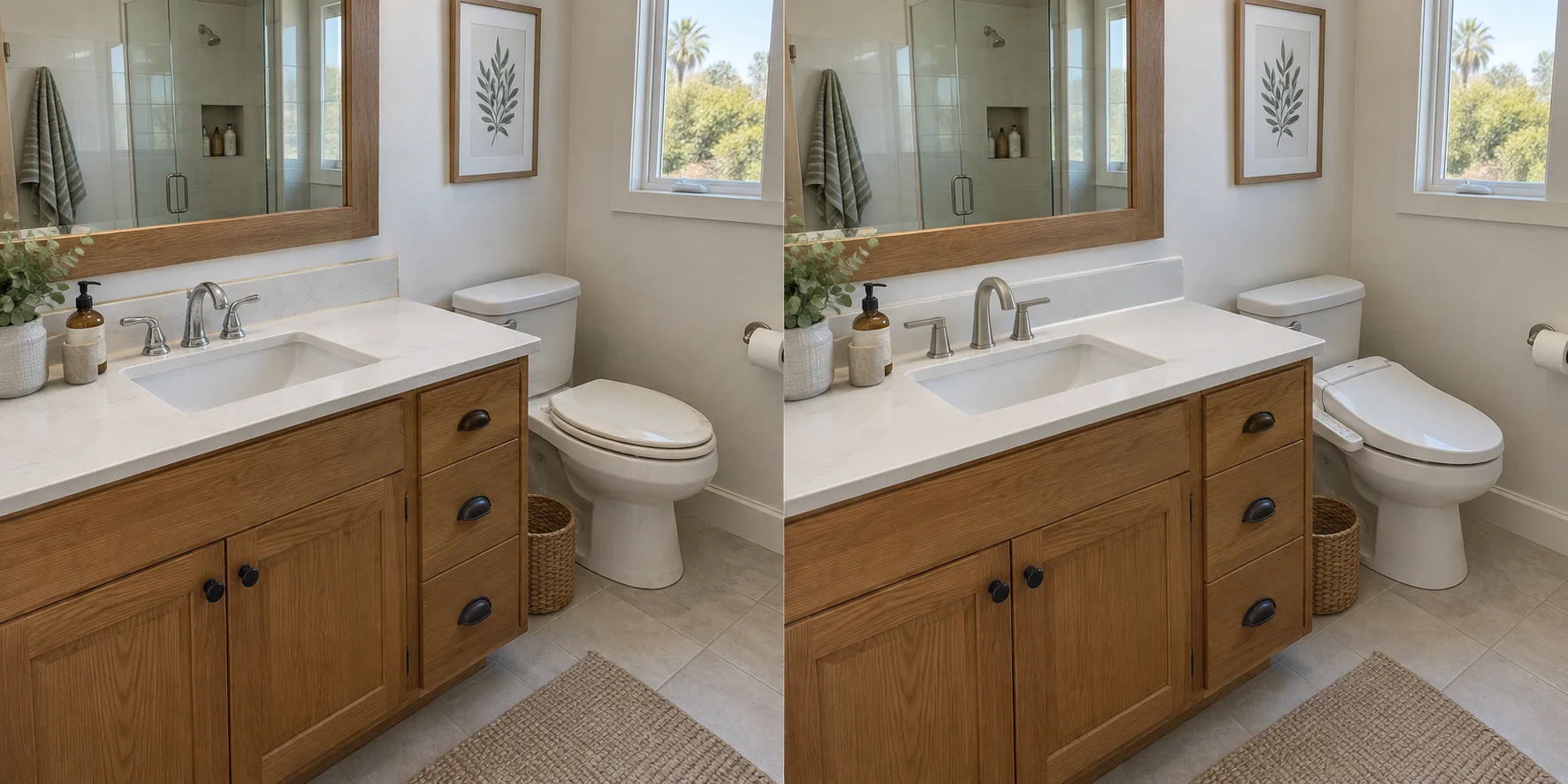
Look at the bowl, floor and visible supply connection without loosening anything. If water is escaping onto the floor, or the bowl is unusually high or backing up, stop using the toilet and arrange prompt plumbing assessment. Skip the dye test below and do not flush to demonstrate the problem.
Photograph the wet area and note when it appeared. A tank-to-bowl leak does not explain every puddle around a toilet; the source of outside moisture needs its own check.
Describe continuous running or separate refill bursts
Kohler describes constant running as an ongoing filling sound, sometimes with ripples in the bowl. Its guidance lists several possible causes, including overflow and a fill valve that does not shut off properly. Record a short video with sound rather than assuming the flapper is responsible.
Occasional refilling has quiet gaps: the tank loses water, then the fill valve replenishes it. Kohler identifies worn flappers or canister seals among the possible causes. Note roughly how often it happens, whether it follows normal use, and whether any parts were recently changed.
Use a dye test only when the toilet is suitable
For a conventional gravity toilet with an accessible tank, normal bowl drainage and no outside leak, EPA WaterSense recommends a simple check. If the tank lid lifts off freely and you can handle it safely, set it securely aside. Skip this check for concealed tanks, sealed pressure vessels or lids with attached controls; use the model's instructions instead.
- Add a couple of drops of food coloring to the tank water.
- Wait 10 minutes without flushing. Color appearing in the bowl shows water has leaked from the tank into the bowl.
- Flush immediately after this test to help prevent staining. Record the result; it does not determine which part needs replacing.
Identify the toilet before ordering parts
Find the model in purchase records, the manual or accessible product markings. Photograph uncertain numbers. Include a whole-toilet photo, the visible supply connection and, if the lid is already safely removed, an overhead view of the tank components. Do not dismantle valves for a better photo.
Send Coast & Craft the symptom pattern, model and photos for a scope review. Mention any outside water, drainage problem or unsuccessful previous repair. Ask for compatible parts and the necessary plumbing work to be confirmed before buying a repair kit.
Sources & product details
Manufacturer instructions for your exact product take precedence over general planning guidance.