Cabinets & hardware · 3 min read
Cabinet child-safety locks: choose for the cabinet and the adults using it
A lock that fits a kitchen door may not fit the shallow drawer above it. Choose by cabinet construction, what you need to restrict access to, and how adults will open and secure it every day. Buying one large pack before checking those details can leave awkward or unusable locks.
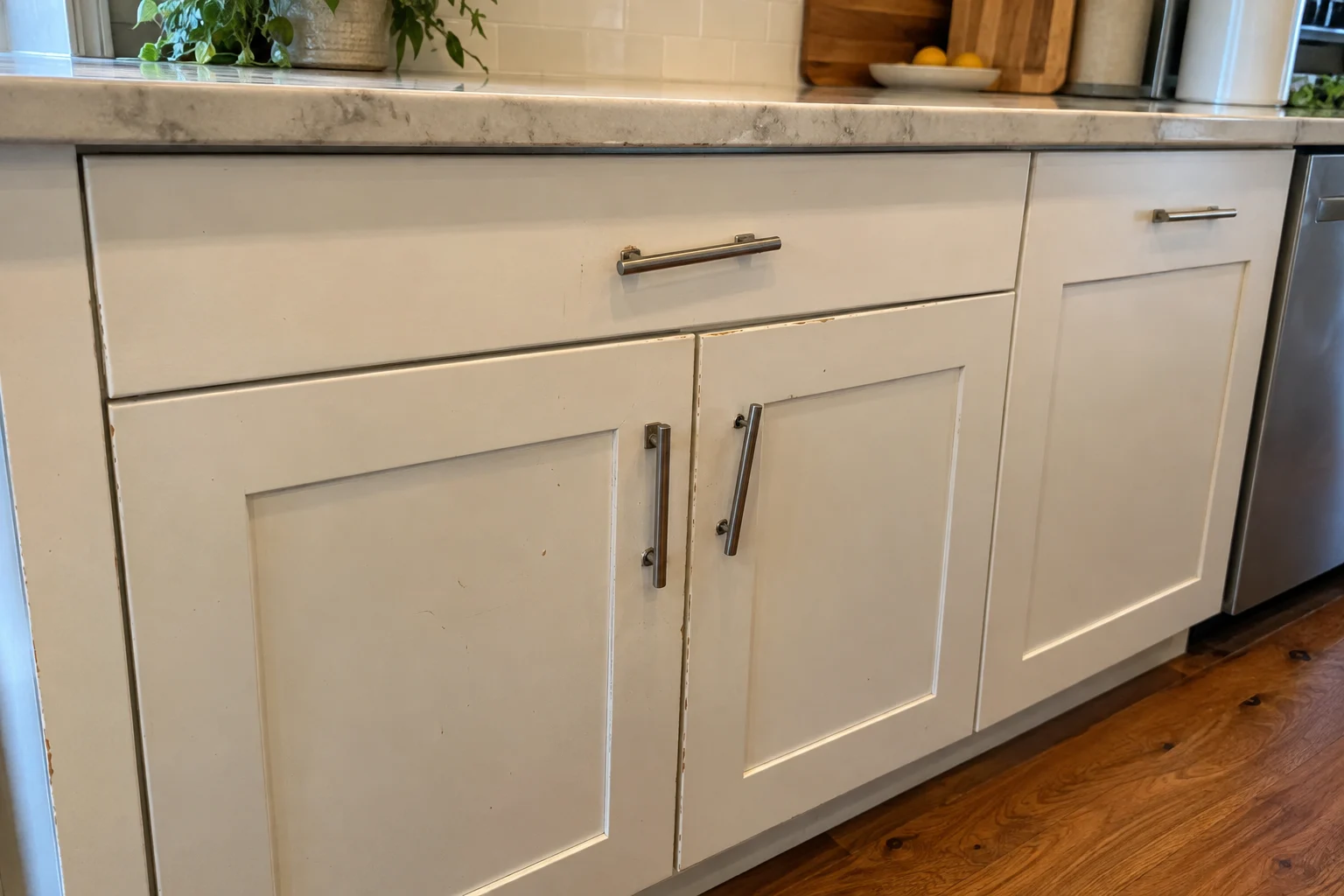
Start with the contents and the product's limits
CPSC recommends cabinet and drawer safety devices as one way to reduce children's access to hazards, but says no device is completely childproof. Correct installation and reengaging it after use matter. Keep hazardous items locked away and out of reach; a latch is not a substitute for supervision.
Read the particular product's exclusions before buying. For example, the Safety 1st Multi-Purpose Latch and HS310/HS315/HS316 internal latches discussed below warn against relying on them to guard toxic substances or sharp objects. A general cabinet-lock recommendation does not override that restriction.
External straps: check the outside surfaces
An external strap leaves its attachment points visible. Include the cabinet front, adjacent side and any raised molding in your photos so the proposed location can be checked before adhesive touches the finish.
Safety 1st's HS148/HS155/HS200/48482A/48486A Multi-Purpose Latch guide lists cabinet drawers among its uses and requires a 24-hour adhesive cure before use. That waiting period belongs in the plan. Check surface preparation against the cabinet maker's finish-care instructions, and ask about removal before using adhesive on a rental cabinet.
Internal latches: allow room to reach the release
Hidden hardware still needs physical space. Safety 1st's HS310/HS315/HS316 guide says cabinet geometry can prevent use; a top drawer beneath a one-inch countertop overhang can also make its release difficult to reach. It cautions that adhesive attachment depends on the underlying surface, including old paint or refinished material.
Include shallow drawers and projecting countertops in the fit assessment. A photo of the handle alone cannot show these obstacles.
Magnetic locks: verify construction, then plan the key
Qdos specifies its Adhesive Magnet Locks for framed cabinets, excluding frameless cabinets and fully inset doors or drawers with flush fronts. It states that its key operates through wood up to 1.5 inches thick. Those are this product's limits, not a rule for every magnetic lock or cabinet material.
A concealed release also means finding the key each time. Decide on a consistent storage point accessible to adults and out of children's reach. Let every caregiver practice using the selected hardware without demonstrating its release to children.
Send a cabinet-by-cabinet request
For Coast & Craft to review the installation scope, send:
- Counts of single doors, paired doors and drawers, with open and closed photos of each different construction.
- The proposed product number and instructions, plus the cabinet material and finish if known.
- Photos of loose hinges, damaged edges or peeling finishes so repairs can be considered before mounting hardware.
- Your preference about visible straps or screw holes, rental approval if needed, and who needs everyday access.
Include the handover in the scope
Ask for a demonstration of the manufacturer's security checks and how to confirm each lock is engaged. Keep the instructions. Reassess the arrangement when hardware is damaged, stops holding or your child learns to defeat it; adding a lock is not a permanent safety guarantee.
Sources & product details
Manufacturer instructions for your exact product take precedence over general planning guidance.