Cabinet & drawer repair · 3 min read
Sagging cabinet shelf? Check the panel and its supports before replacing it
A bowed cabinet shelf and a shelf that has slipped off one support need different assessments. Replacing the panel alone may leave an attachment problem unresolved. Before ordering, identify the cabinet, photograph the visible damage and describe what the shelf normally holds. Don't add weight to see whether it will stay put.
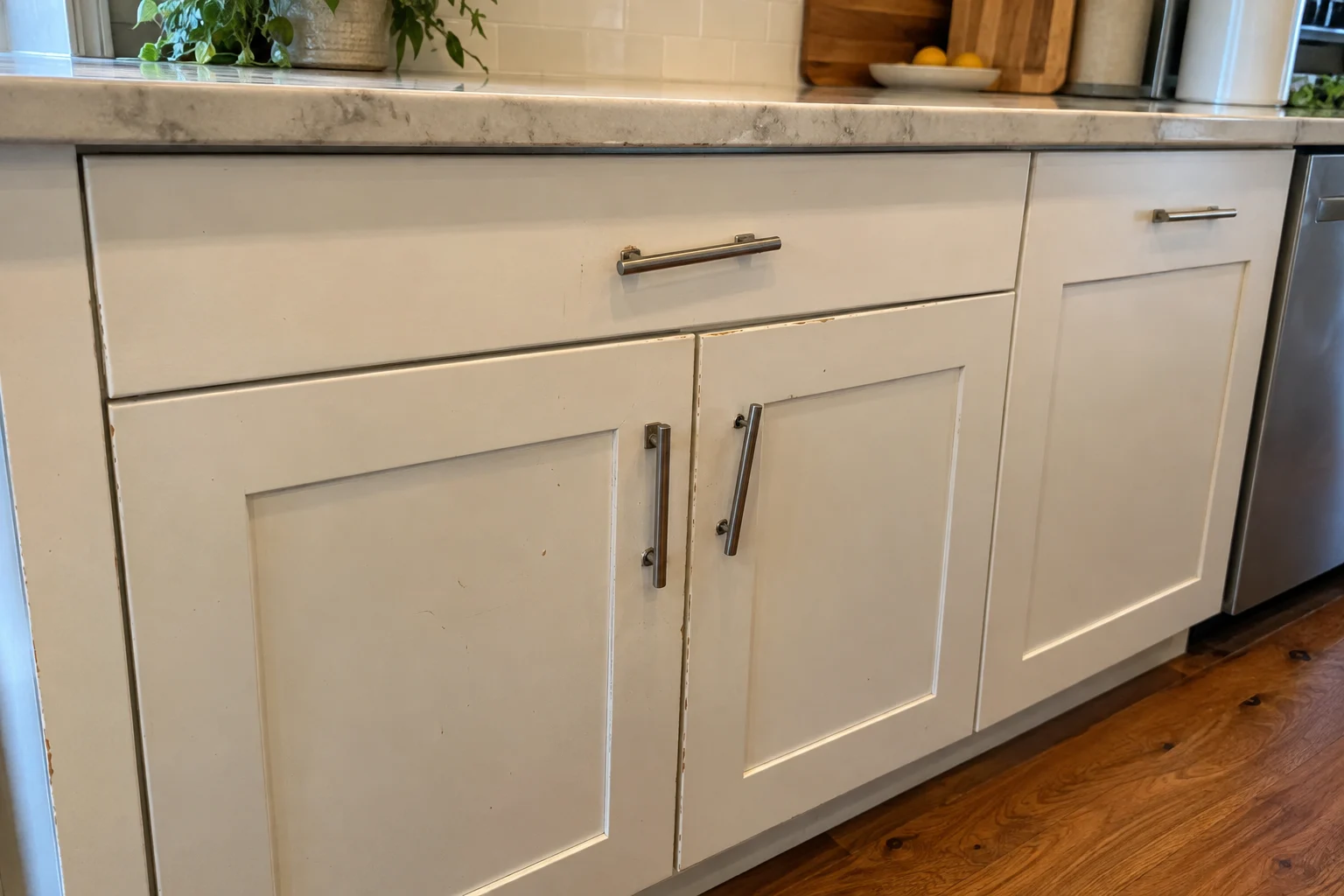
Describe what changed without disturbing the shelf
From a safe position, note whether the center appears bowed, one corner has dropped, an edge is swollen or a support is visibly missing. These observations help define the assessment without proving the cause. Report any recent spill, leak or change to heavier stored items.
If the shelf appears unstable, leave it undisturbed and keep people clear while arranging help. Ask the repairer to distinguish panel damage from loose hardware or damaged support holes. If the cabinet itself moves, that needs separate attention before a shelf-only repair is agreed.
Use actual shelf dimensions, not the cabinet's label
Look for the cabinet brand and original order or part number. As a concrete example, IKEA's UTRUSTA 002.655.33 is sold for a 24-by-24-inch system, but its published shelf dimensions are 22½ inches wide and 23 inches deep. The system size is not a cutting list.
Have the installer confirm the inside width, shelf depth and thickness, including the space needed to fit the shelf through the opening. Door hinges, a face-frame opening, rear fittings or an existing notch can affect the shape. Keep approximate homeowner measurements separate from final ordering dimensions.
Match the support hardware as carefully as the panel
Knape & Vogt's 339 WH locking support, for example, is specified for ¾-inch shelves and 5 mm mounting holes, with a ¼-inch pin length. Those are separate fit requirements. This example does not identify the hardware in your cabinet or establish that another pin will work.
Photograph any safely visible support and its location. Ask whether the replacement needs matching pins, clips, recesses or locking features, and whether the existing holes remain suitable. Let the installer determine any repair to the cabinet sides; do not enlarge holes or substitute screws to make an unmatched support fit.
Choose material and capacity around the intended contents
The cited white UTRUSTA shelf uses particleboard, melamine foil and plastic edging, and has its own published thickness and maximum load. Those specifications do not rate a different replacement or a damaged cabinet. Tell the repairer whether you store plates, small appliances or lightweight containers, and ask for the proposed shelf-and-support arrangement to suit that use.
A thicker replacement still needs a support and clearance review. For glass, request the correct replacement and handling plan. IKEA warns that damaged edges or surface scratches on its tempered-glass UTRUSTA corner shelf can lead to sudden breakage. Leave damaged glass undisturbed for professional assessment; do not attempt trimming or repair.
Send one clear repair request
Send Coast & Craft your city, cabinet records, an overview photo, close-ups available without disturbing the shelf and a description of its contents. State whether you want a matching replacement or a different storage arrangement. Ask the scope to cover the panel, compatible supports, any cabinet damage, finish details and disposal before a visit is agreed.
Sources & product details
Manufacturer instructions for your exact product take precedence over general planning guidance.