Cabinet & drawer repair · 3 min read
Replacing one cabinet door: check size, hinge holes and finish first
A replacement cabinet door can look right online and still arrive too small, drilled for the wrong hinge position or noticeably different from the doors beside it. Treat size, hardware and appearance as three separate approvals before placing a custom order.
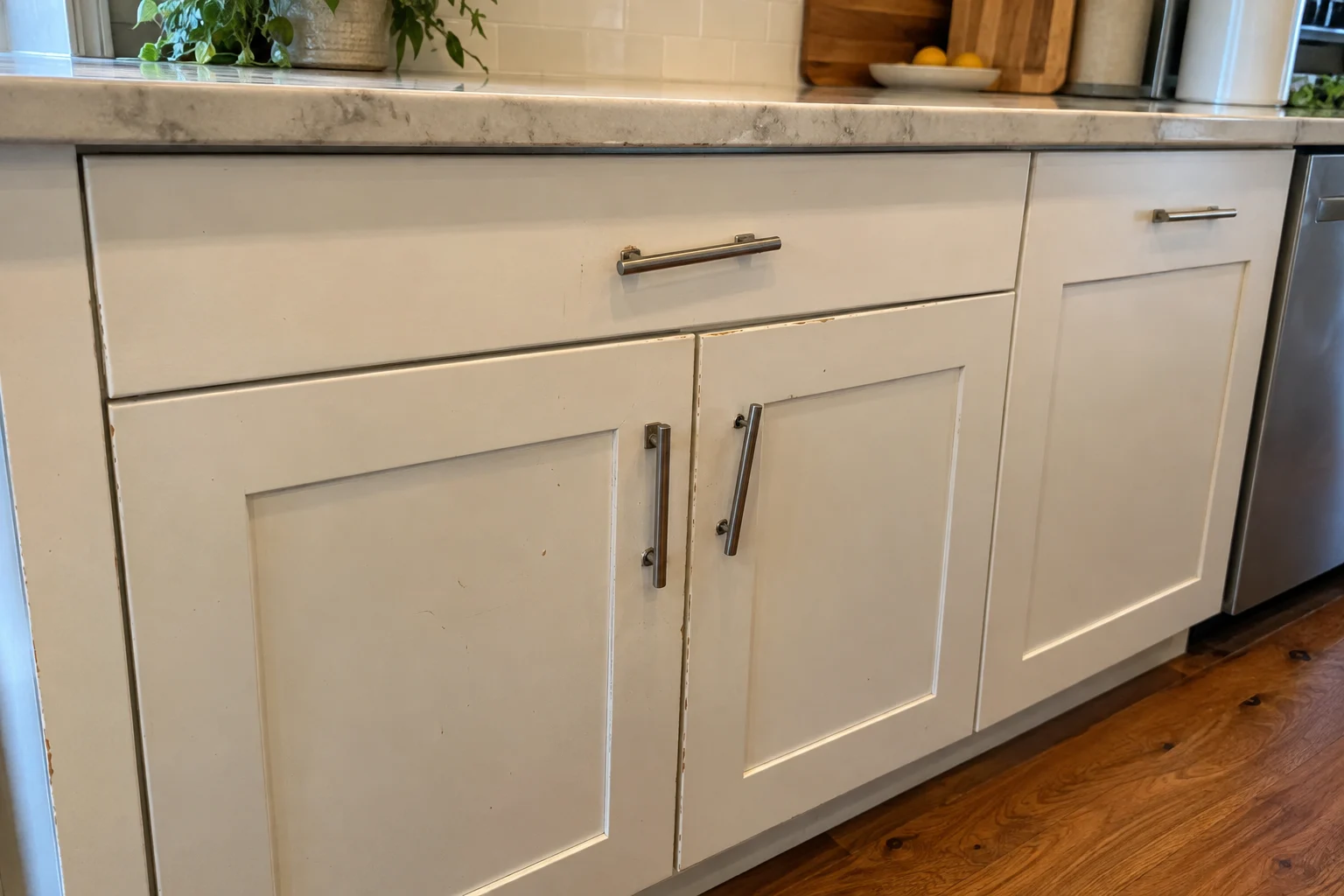
Start with the door that needs replacing
Photograph the damaged door closed, its neighboring fronts, and the inside with the hinge visible. Include any brand label or original order information. Keep the old door until the replacement has been accepted, if it can be stored safely; it is useful evidence for the profile and hardware.
Clarify the problem before buying. A door that hangs crooked may need a hinge or mounting repair. A damaged panel may call for a replacement. Ask for that distinction during scope review so the proposed work addresses the actual defect.
Do not confuse the opening with the finished door
Overlay is the portion of the door that extends beyond the cabinet opening. CabinetDoors.com explains that opening measurements, overlay and hinge selection work together; changing hinges may change the required dimensions. Neighboring doors, drawer fronts and countertops also limit available clearance.
Xpress Cabinet Doors gives separate measuring guidance for reusing an existing door's hinges and for a missing door. Those situations should not share an unlabeled width and height. Record which measurements describe the opening and which describe the existing door, and let the chosen supplier confirm its ordering method.
- Label the cabinet location and the door's width and height separately.
- Record whether one door or a pair covers the opening; do not assume each door is half its width.
- Show whether the door sits within the frame or overlaps it, plus the gaps around neighboring fronts.
- Identify measurements as preliminary until the supplier or installer checks them.
Approve hinge boring separately from door size
A cup-style concealed hinge has a cup that fits a bored recess in the back of the door. Matching the outside dimensions does not establish where those recesses belong. Xpress's existing-hinge guide records the bore centers relative to the top and bottom edges. Share hinge photos and markings rather than ordering solely from the description 'soft close.'
Ask whether the seller's offered pattern matches the hardware you intend to use. Cabinet Doors 'N' More, for example, specifies predetermined boring positions and says custom boring is unavailable. Another supplier may offer different choices. Confirm the actual product specification before selecting a drilling option; do not assume an installer can correct misplaced holes invisibly.
Treat a matching finish as a separate decision
Cabinet Doors 'N' More notes that stains vary by manufacturer and wood type. A similar color name is therefore a poor basis for approving one replacement among existing doors. Ask for a physical sample and compare it beside the cabinets in the room's usual lighting.
Include the edge shape, panel profile, material and sheen in the comparison. Decide whether an acceptable result means a close match, a visibly different accent, or a broader refinishing project. Put that choice in the scope rather than assuming a new door will disappear into the old set.
Send one clear request before ordering
Send Coast & Craft the cabinet photos, preliminary dimensions and product link for scope review. State whether you want help confirming a purchase or fitting a door already ordered. Ask who will approve final measurements, supply hinges, prepare the finish and fit the handle. Keep those responsibilities with the order confirmation so an installation visit starts with the right parts.
Sources & product details
Manufacturer instructions for your exact product take precedence over general planning guidance.