Mounting & installation · 3 min read
Hiding TV cables: a surface cover or a route inside the wall?
Start by deciding whether a neat cover on the wall meets your goal. A surface channel, a pass-through for signal cables and a power connection behind the TV are different products and different scopes of work. Buying something labeled cable management does not establish which job it can do.
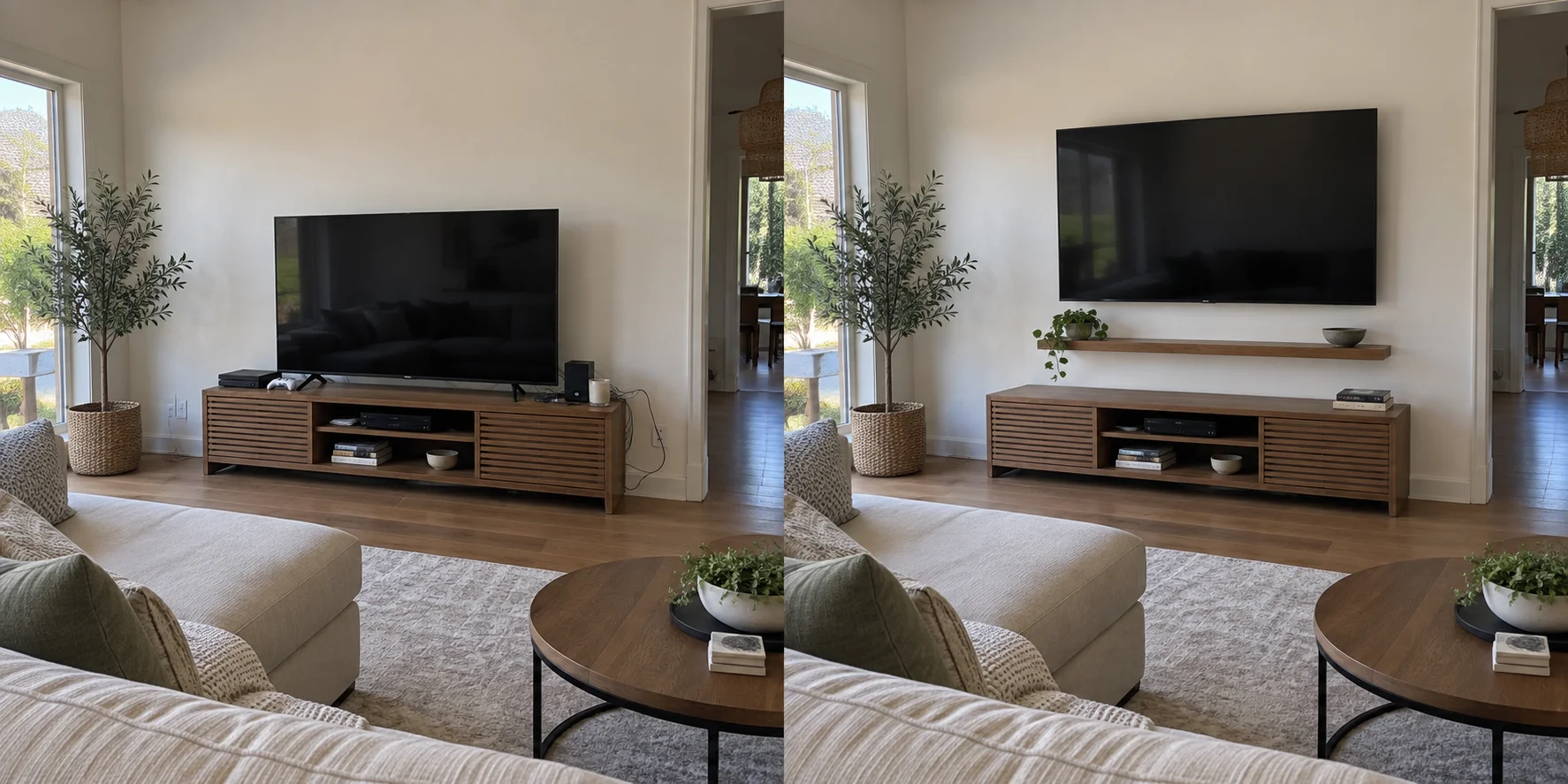
A surface cover keeps the route on the wall
A cover may suit a short run between the TV and console when you can accept a visible channel. For example, Legrand's CordMate III C310 has a hinged lid for cable access and can be painted with latex-based paint. Its fittings accommodate several route changes; the actual bundle and corners still need checking against the selected system.
Mark the proposed path on a wall photo. Include where the channel stops, whether it crosses trim and whether painting is part of the work. Legrand warns that its adhesive bond can make removal difficult or damage the surface if handled carelessly. Adhesive mounting does not establish that a later removal will leave the paint untouched.
A cable pass-through is not a power outlet
If you already have suitable power at the screen, the remaining task may concern the signal connections to devices elsewhere. SANUS labels its SA-IWCM2 wall-plate kit for low-voltage cables only and explicitly prohibits putting a power-supply cord inside the wall cavity.
Keep the power question separate when requesting concealed HDMI, network or other signal cables. Do not feed an ordinary TV power cord or extension cord through a wall opening. Ask for a suitable power arrangement to be assessed, with new outlets or hardwired alterations handled as separate work by an appropriately qualified provider.
Check a proposed in-wall kit against the wall
A prewired power kit also has installation limits. The SANUS WSIWP1-W1 manual, for example, calls for at least 3 inches of wall-cavity depth and drywall between 1/2 and 1 inch thick. It flags fire blocking and blown-in insulation as conditions affecting the route. Those are requirements for that kit, not dimensions that approve every wall or product.
Have the installer check construction, hidden obstructions, module positions and plug clearance before committing to concealed work. If the route needs additional wall access or specialist work, ask for that to be identified in the proposal. Do not make exploratory openings or modify framing to test a kit's fit.
Plan for the next device as well as today's cables
A useful finish still lets you reach the connections you use. Include these details in the request so the installer can compare a surface route with the proposed concealed arrangement:
- TV, soundbar and other device models, plus each device's final location.
- Photos showing existing outlets, ports, the console and the complete wall.
- Which connections must remain accessible for swapping equipment.
- Any mount movement that needs cable slack and clearance checked.
- Module or cover locations, wall repairs, paint boundaries and a final picture-and-sound check.
Request the finish you actually want
Send Coast & Craft the equipment list and marked-up photo, and say whether a painted surface channel is acceptable. The team can review the mounting and finishing scope and identify any separate electrical work before confirming a visit.
Sources & product details
Manufacturer instructions for your exact product take precedence over general planning guidance.